Wednesday, 2 June 2021

Melodious Warbler

Melodious Warbler

Friday 28th May 2021: Cloudy with some very light rain, 15°, light ENE.

I took one of my usual walks out to Lollingdon Hill, nothing much to shout about apart from 3 Goldcrest.

As I stood in one of my usual spots I heard an unfamiliar song coming from the hedgerow up the track.

The bird was in deep cover but singing regularly. I manage to record the song and messaged it to a couple of local birders.

In the mean time I had only seen the bird very briefly and on those views it suggested an Acrocephalus or Hippolais Warbler.

I then checked the song on my phone app and came up with Melodious Warbler at roughly the same time I got a message back concurring with that ID.

I then phoned a few local birders and requested they attend to confirm ID.

Later the bird started to show a little better and the ID was clinched.

A discussion later was then had about releasing the news generally. However, there is nowhere to park out at Lollingdon, all the adjacent fields have crops and it is a single track, private, badly maintained lane with either ditches or raised banks. Plus there has been building work going on out there and heavy vehicles as well as farm vehicles are up and down the lane.

We also have a good relationship with local landowners and residents and did not want to jeopardise that for obvious reasons.

The bird was not seen or heard after 16:30 that day and not since despite searching.

Subsequently I made the decision not to release the news until now.

The following are a series of photographs taken by four of those present.

Alan Dawson, Ian Lewington, Roger Wyatt, Geoff Wyatt, Tony Williams and Myself.


Friday, 11 December 2020

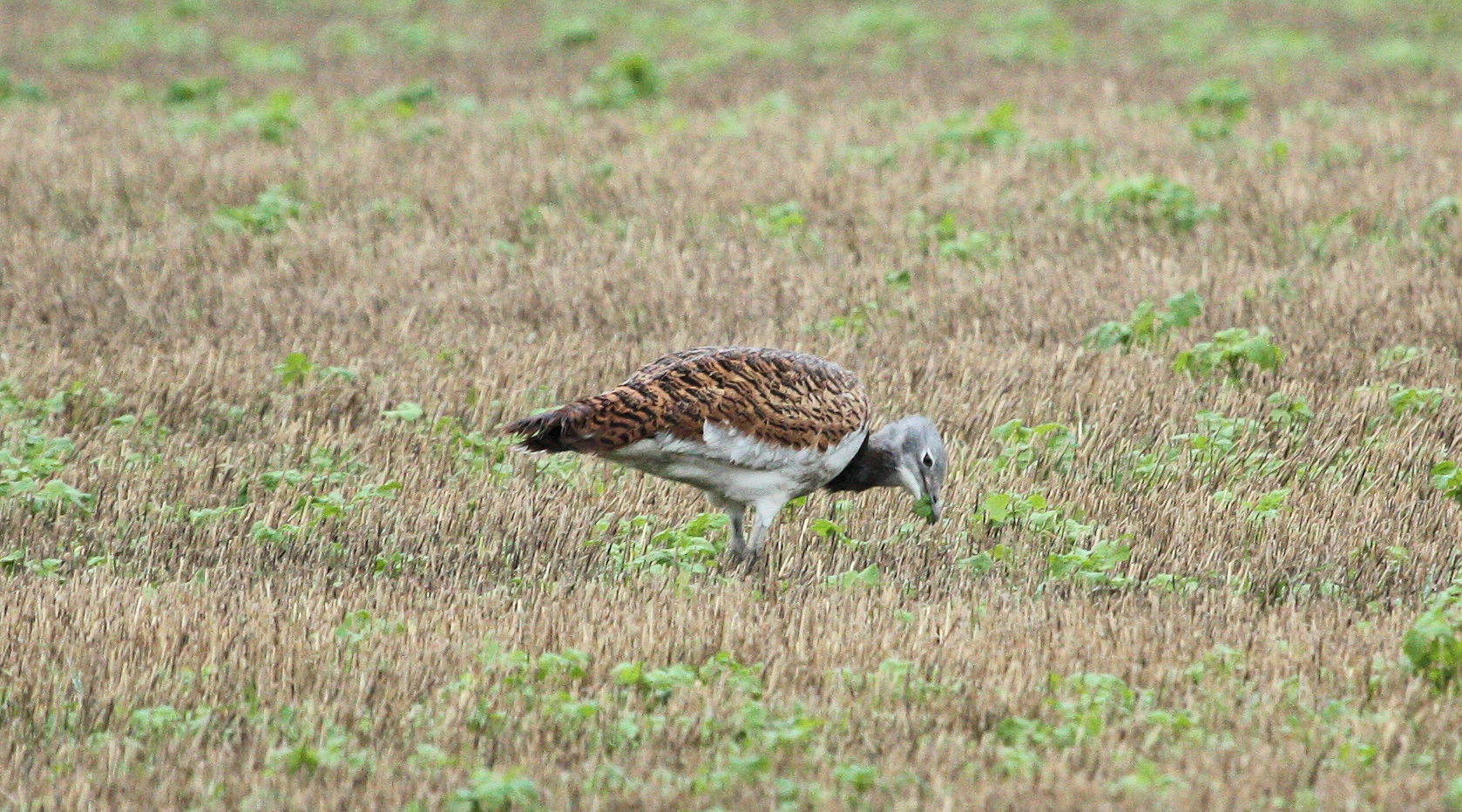
Great Bustard

Cloudy with frequent light rain, 7°, light SE.

A trip out to Letcombe Regis this morning to see a Great Bustard.

The bird has been frequenting an area in Letcombe Regis since the weekend and may have been present in South Oxfordshire for a couple of months.

The bird is from the “Great Bustard re-introduction Project” in Wiltshire.

Alan visited the site earlier in the week and have included one of his photos here.

Whatever its provenance, still a good bird to see.


Tuesday, 29 September 2020

Bird Race 1992

Article featured in UKAEA Harwell News.

On 9 May 1992 across the country, Birders and twitchers were likely to be spotted behaving in a frantic manner racing around trying to notch up as many species as possible. It was the day of the nationwide “County Bird Race” sponsored by “In Focus”. The idea was that teams of four Birders attempted to find and identify as many species as possible in 24 hours within their county. That year, two members of AEA Technology, Group member Peter Pool and Paul Chandler were competing in the event. Peter was a design draughtsman at Culham and was a veteran of the event whilst for Paul the computer consultant with ETSU it was to be his first time. Both were experienced birdwatchers, Peter had been very involved with the RSPB for a long time and Paul was a self-confessed twitcher also very much into ‘green’ issues. With two other team members, Peter and Paul were to compete against three other teams in Oxfordshire. The goal was to find 100 species. The current county record was 99 species. The main aim of the event was to raise money for two charities, the county’s wildlife trust BBONT, and the International Council for Bird Preservation (ICBP)’s Spanish Steppes Appeal (to save the Great Bustard). The previous year, 100 teams took part and raised £10,000 in cash for the ICBP. 


Monday, 31 August 2020

Back in Time – Chumming for Black Grouse

On the 6th March 1993 our team took a late winter trip to Scotland on a twitch for a Ross’s Gull near Inverness but unfortunately it was not there after the long journey north (fortunately I had seen one in 88 in Devon). We hired a car from a local dealer where my daughter then worked, a Ford Granada automatic a bit of a novelty so we all had a drive of it during our trip. Geoff and Roger Wyatt, Martin Hallam, Justin Taylor and myself all went north and decided to make a week end of it so after dipping the gull we continued up to Grantown on Spey to clean up on some Scottish specialities.

We arrived at Grantown and booked in to a B&B and then went to one of the local hotels to get some food and a few beers, as luck would have it there was a two piece band performing in the hotel that night complete with a drum machine, guitar etc, doing covers of pop songs from the 60’s and 70’s which fortunately or unfortunately (depending on your view) we all knew the words to so as the beer flowed so did our vocal prowess led by our choirmaster Geoff.

We even complimented vocally the drum machine intros and sang along with just about every track they played and at one point the guitarist broke a string but we managed to fill in on the song until the guitar was restrung. Come the end of the night we even got applause from band themselves and some of the audience and needless to say we were well oiled!

This was one of several trips to Scotland we made for various rarities and we must admit that apart from the birds (‘cos they are in our notebooks) the memories of the rest of the trips tend to be rather vague and especially as influenced by alcohol. On one trip we camped in Grantown cemetery for a night as we could not get a B&B, luckily it was not Halloween that night.

OK, so the following morning we are out early, all with various degrees of a hangover and Roger being particularly worse for wear. One of our target species was Black Grouse as Justin had not seen them before so we started a tour of potential sites. Every now and again we would have to stop for one of the passengers to get out of the car and regurgitate some of the previous nights intake, now at one point Roger said “stop the car”, he opened the passenger door and immediately regurgitate and at that point two male Black Grouse flew from right to left over the car that proves the point that “chumming” and for Black Grouse inland can work.

Some irony here also as in the back seat Martin was sat on one side of the car and saw them, me sat on the other side saw them but Justin sat in the middle missed them and he was the one who needed to see them! However we did see some more on the trip so Justin did get his Black Grouse.

Overall we had a pretty good week end with Crested Tit, Scottish Crossbill, Golden Eagle, Ptarmigan, Red Grouse, Black Grouse, Snow Bunting, Iceland Gull, Goshawk, Hen Harrier, Capercallie, thousands of Pink-footed Geese, a Snow Goose, many Common Eider and a several Red Squirrel and thanks to Geoff Wyatt for his input on this one.

Saturday, 29 August 2020

Back in Time – St Abbs Head

25th May 1993 saw 4 of us; Ian Lewington, Martin Hallam, Graham Etherington and I make for St Abbs Head in the borders for a Marmora’s Warbler.

If I recall it was a bit of a white knuckle ride as Graham was driving and he had a rather sporty looking car and I’m sure he was in contention for an F1 spot, racing along small country lanes to get us there.

Still we made St Abbs shortly after dawn and found the Marmora’s still present, it was a 1st summer male and a beauty of a bird.

St Abbs head is a national nature reserve on the coast of Berwickshire in the Scottish borders and a very scenic spot, also the home to a large seabird colony that nest on the cliffs that are part of the reserve, a place I would certainly visit again.

After taking our fill of the Marmora’s Warbler we decided to head back south and on the way back we decided to drop in on the Farne Islands as we had heard that “Elsie” the Lesser Crested Tern had been seen recently among the Tern colony there.

We got to Seahouses and managed to take the boat over to Inner Farne, the weather was good and the sea relatively calm. On arrival we spoke to one of the wardens present who said that Elsie had not been seen for a few days, none the less we would still make the most of a visit to these beautiful islands and take in the wealth of seabird’s present breeding on and around the islands.

We wound our way around the various footpaths on the island and constantly being attacked by Arctic Terns that were breeding close to the paths, Martin actually ended up with a small cut on his forehead from a Tern that made contact!

Whilst getting our fill of all the Terns and Auks that were around and scanning some of the coastal rocks I noticed a group of around 50 Sandwich Terns so I promptly set up my ‘scope and went through them one by one and to my surprise found one with a big orangey-yellow bill, that was Elsie!

I called the others over and we sat and enjoyed our 2nd tick of the day.

We stayed on the island a little longer to enjoy the many Terns and Auks present around and take in the atmosphere of the Farne islands.

A very satisfying day, in fact May 1993 was a superb month for rarities with a White Stork at Sidlesham, (Red-headed Bunting) Ipswich, Citrine Wagtail Fleet, Oriental Pratincole Gimmingham, the Marmora’s and Elsie, Great Reed Warbler Elmley, Sardinian Warbler Dungeness, and a Pacific Swift to round off the month at Cley, also other trips to Norfolk, Suffolk, Portland and the Oxon birdrace (107 species), almost 200 species seen that month and many miles driven!

Tuesday, 25 August 2020

Back in Time - Thrush bonanza


We arrived on Scilly on October 8th 1999 to the prospect of some good birds; we arrived at the airport on St Mary’s and were keen to get going.

We just dumped our luggage at the flat and went down to the quay straight away and boarded an inter-island boat for St Agnes where a Siberian Thrush was being seen. We arrived on Aggie and walked to the island of Gugh over the sand bar (that is reachable at low tide) where the bird was being seen in a small plantation. Milling around looking for about 20 minutes when a shout went up that the bird was flying, which it did, immediately past us. Great flight views were obtained and the bird then flew out of sight and that was that. The next bird to go for was a Short-toed Eagle that had taken up residency on the Eastern Isles. A boat was organised and Martin and I decided to go for it.

A nice steady boat ride out to the Eastern Isles produced the bird sat on one of the rocky outcrops (we did not land). With 2 good birds seen we decided to get back to the flat to get organised and get some food in. Within 4 hours of landing on Scilly we had seen Siberian Thrush, Short-toed Eagle, Peregrine and Hen Harrier. The Eagle stayed around and we saw it several more times over the islands.

There was also a White’s Thrush on St Agnes whether it was there when we went for the “Sibe” I don’t remember but the following day we were back on St Agnes where fortunately enough we got good views of the elusive White’s Thrush and an expected Red-breasted Flycatcher. We then saw the White’s on 2 more occasions that week a great bird to see.

Over the following week only one of our group had not seen the White’s and that was Lew. The best moment of this was Lew spent quite a few hours looking for the White’s but was having no luck. Later one evening Lew was reviewing his video footage on the TV from the days birding and the White’s Thrush appeared on the TV screen! What! The scenario had been that Lew left his video running while he walked over to talk to someone and the Thrush had walked through the field of view in the area his video was trained on. Fortunately he saw it later in the week but that would have been ironic if he had not seen it.


Friday the 15th dawned and out birding when a call went up for a male Blue Rock Thrush at Porthloo, fortunately we were not too far away and got there fairly quickly and the thrush was in view and it was a cracking male. In time several hundred birders had turned up and most had now seen Siberian Thrush, White’s Thrush and now Blue Rock Thrush all within a week, that’s Scilly for you.

Come the end of the holiday we were waiting at the airport for the plane back to the mainland when a shout went up for a Chimney Swift over St Mary’s we rushed out of the departure lounge and as we were on high ground we might be in with a chance as we still had a little time before the plane went. True to form our luck held and the Swift duly performed.

Over the 2 weeks the islands were blessed with quite a few other rare and scarce birds that were duly seen by all of us. Upland Sandpiper, Red-backed Shrike, Siberian Stonechat, Radde’s Warbler, Pallas’s Warbler, Yellow-browed Warbler, Firecrest, Ring Ousel, Long-eared Owl etc and rounded off with a Red-flanked Bluetail at Rame head in Cornwall on the way home, also several sightings of Monarch Butterfly on the islands and many other common migrants. That 2 week trip had 9 Thrush species and 3 ticks (the 3 thrushes for me) seen on Scilly which made an excellent 2 week holiday. Another great Scilly trip and looking forward to more.

Saturday, 22 August 2020

Back in Time – Ruby, Ruby, Ruby, Ruby

Mid afternoon on Sunday 19th October 1997 a message flashed on to the pager “Siberian Rubythroat ♂ Osmington Mills, Dorset”, the first mainland one since Durham 1975.

Within moments Geoff had phoned and in another 15 minutes we were on our way. At that point in time Geoff had a Peugeot 305 Diesel Turbo that went like the proverbial off a shovel and it’s the quickest I have ever got to Dorset (in less than 2 hours).

Normally I am not the hottest navigator (but that’s another story) but we got there in record time, we pulled up at the spot in Osmington to see a fair few cars already there. I noticed Martin Cade (Portland bird Obs warden) and a few other Dorset birders leaving and they indicated that the bird was still present. We walked through a gateway in to a field that had an area of hedge and scrub and the bird was apparently in there. I am not sure how long we waited but after a time the bird was seen and it was a spanking ♂ (1stw) and some very good views were had with the bird around 20 metres away. After satisfying ourselves with the views we had and the bird had disappeared in to cover we decided to take our leave. We also noticed another SODOFF’er, Justin Taylor there and I think he was the only other Oxfordshire birder to make it on the day.

The drive home was very relaxed with that satisfying feeling of seeing an “ultra-mega” and an absolute beauty of a bird.

The following day, (as we saw in the national press), there were hundreds there but the bird had apparently gone (sorry guys) much to the disappointment of the many there.

A little while later we had a SODOFF meeting and I wore a T-shirt that Lew had done with a Rubythroat on it and I used a marker pen to write a few comments much to the dismay of others people at the meeting who got there on the Monday (sorry Nick). However there has been a couple of “twitchable” rubythroats since so no hard feelings eh!